
Get Healthy!
- Posted June 25, 2026
Brain Scans Improve Targeting Of Magnetic Stimulation For Depression
Personalized brain imaging could help doctors better use magnetic stimulation to treat people with severe depression, a new study says.
Such brain imaging helped researchers better target accelerated transcranial magnetic stimulation (aTMS), producing a reduction in depression symptoms and better treatment response rates, researchers reported June 24 in JAMA Psychiatry.
The results “provide prospective evidence that there may be clinical advantages to using functional imaging to guide accelerated TMS treatment,” said lead researcher Dr. Joseph Taylor, an endowed chair in psychiatry at Mass General Brigham in Boston.
“These findings are important as aTMS becomes more widely available and decisions are made about how to scale this intervention for patients with depression and other psychiatric illnesses,” he said in a news release.
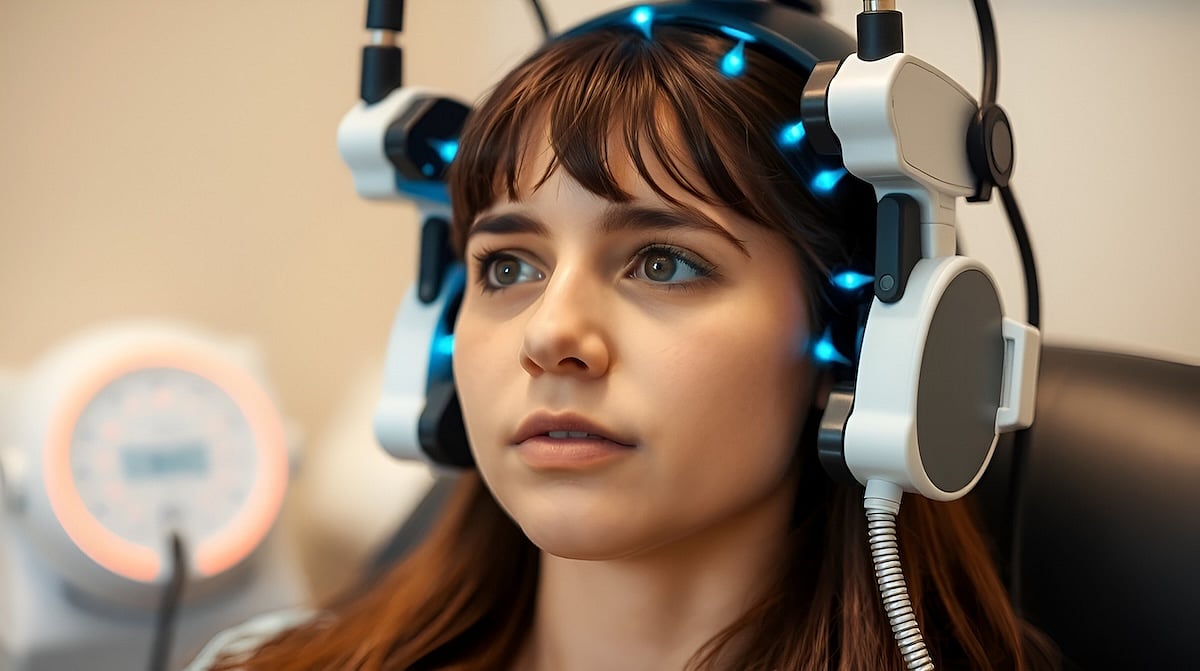
TMS uses magnetic pulses applied outside a person’s skull to modulate their brain activity, researchers said in background notes. It’s been U.S. Food and Drug Administration-approved for treating major depressive disorder in adults since 2008.
However, targeting the treatment has relied on scalp-based measurements up to now, which cannot account for differences in brain structure between individuals, researchers said.
For the new study, researchers tested whether accelerated TMS would be more potent against depression if it were directed using MRI scans instead. In accelerated TMS, patients receive multiple treatment sessions per day, which can condense several weeks of treatment into a single week.
“Neuroimaging has taught us a tremendous amount about the brain, but it has been difficult to show that imaging can directly improve patient care,” Taylor said.
For the new study, researchers recruited 40 people ages 22 to 80 with major depressive disorder that hadn’t responded to medication.
Patients were randomly assigned to receive accelerated TMS using either traditional scalp measurements or MRI targeting.
After one month, patients who received MRI-targeted treatment had significantly lower symptoms of depression than those who received usual TMS, results showed.
They also had higher response rates, 80% versus 60%, researchers said.
However, a larger trial is needed to confirm these results, researchers noted.
“It is important to address this knowledge gap because imaging adds cost and complexity to TMS treatment,” Taylor said. “In this study, our goal was to measure how much impact our approach to imaging-based targeting would have above and beyond conventional scalp-based targeting.”
More information
The Mayo Clinic has more on transcranial magnetic stimulation for depression.
SOURCE: Mass General Brigham, news release, June 24, 2026


